
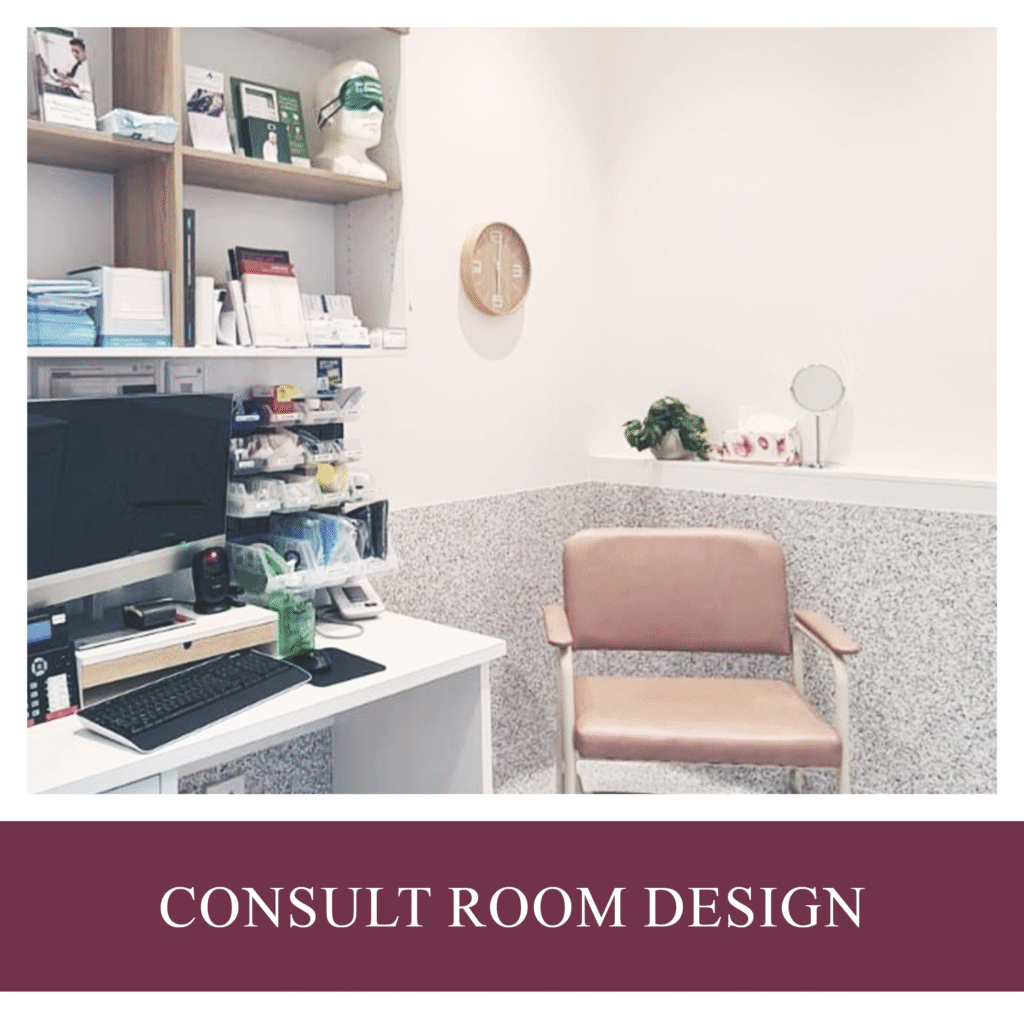
DESIGNING THE IDEAL PHARMACY CONSULTATION ROOM: HOW MANY DO YOU NEED AND WHAT SHOULD THEY LOOK LIKE?
Consult, counselling or clinic rooms – call them what you like, but with the evolution of professional services over the last decade, the consultation room design and purpose have also changed. What used to be a modest 2m x 2m room or a semi-private area behind a screen is no longer sufficient for pharmacies embracing professional services and wanting to provide their patients with the best experience.
When well-planned and well-used, pharmacy consult rooms can generate substantial return on investment (ROI). However, careful planning is key to ensuring their success. Before you decide to carve off half your space to consult rooms, it’s important to understand what a good consult room looks like and how many are necessary for your pharmacy’s goals.
We’ve all seen, or perhaps even experienced, the “spare” consult room—an expensive, over-equipped space that ends up being used as an over-priced storage area instead of a hub of professional service. So, what does a good consult room look like for pharmacy today? And how many should you have?
These are two of the most common questions our team has received from clients over the past year. They’ve driven many of our conversations with pharmacy owners who are considering redesigning or expanding their spaces in order to accommodate more consult areas. As with many aspects of pharmacy business, there is a degree of ‘horses for courses’ – and consult rooms are no exception. To answer these questions effectively, let’s explore the key considerations to determine what works best for your pharmacy.
Resources and Services Offered:
The key to success is ensuring the rooms are used for specific, purpose-driven services. Consider who will use them and what services your staff are trained to deliver. Will your pharmacy offer allied health services in addition to professional pharmacy consultations? Are your staff trained in specialised treatments such as CPAP therapy? Identifying your current resources and your future capabilities will guide you in making realistic decisions about the consult room layout, size and number of rooms required. This is a critical consideration in any pharmacy fitout or redesign process.
A small pharmacy with a single pharmacist and a dedicated support team may require two consultation rooms- 1 main one and a second for allied health services or staff trained in specialised treatments. However, larger pharmacies or those offering a wider range of services will likely require more.
Once you determine who will use the room and for what, many of the logistical questions – such as how many rooms are needed and their size – start to answer themselves.
Aligning with your Business Goals:
Now you’ve assessed your resources, it’s time to consider your business direction and how your consult rooms align with your pharmacy’s overall vision and business goals. What does your service offering look like today and what is the strategy moving forward?
If your business goals align with a strong health and wellbeing focus – delivering value to your patients through meaningful interactions and offering health solutions – then ensuring you have the right number of clinic rooms with the appropriate features becomes essential. Consult rooms help position your pharmacy as a health destination, and their number, size, and layout can influence how your patients perceive your pharmacy. By positioning your pharmacy as a health destination, with spaces designed for personalised care, you can foster stronger relationships with your patients, encouraging loyalty and repeat visits
Pharmacy Size and Layout Constraints:
In an ideal world, space wouldn’t be an issue, and the possibilities for the number, size, and positioning of consultation rooms would be endless. In reality, pharmacy size and layout play a significant role in determining how many consultation rooms you can add, and where they should be placed.
The location within the pharmacy should be carefully considered to allow easy access for both patients and staff, while also maintaining a smooth flow of traffic. Positioning your consultation rooms too close to high-traffic areas can create disruption, while rooms placed in out-of-the-way corners may not get the attention they deserve, especially if you want your patients to see you as their local health destination.
Striking the right balance between accessibility, privacy, and space efficiency is key to successful consultation room integration.
Creating the Right Consultation Environment:
A well-designed private consultation space helps facilitate open communication between patients and pharmacists. The space should be large enough to accommodate patients, carers, and pharmacists comfortably, yet not too large, as it could feel impersonal and hinder the trust needed for honest discussions.
Privacy is also crucial. Patients need to feel secure when sharing personal health information [ref]. Design elements like floor-to-ceiling walls or soundproofing can help provide that sense of security. However, this may not be as critical in rooms designed exclusively for vaccinations. Understanding the purpose of each room helps you tailor its design to fit the service it will provide.
Striking the right balance between comfort, accessibility, and privacy is essential for creating a positive consultation experience where patients feel comfortable sharing personal information and engaging in open discussions about their health.
Compliance and Legal Requirements:
Before finalising the design of your clinic room, ensure that you meet all relevant building codes, accessibility standards, and pharmacy board requirements. Compliance with these regulations is essential and each requirement needs to be considered so that it supports the intended purpose without interfering with the functionality of the clinic room.
Finishing Touches that Matter:
Once you’ve addressed the larger questions, the finer details can significantly enhance your pharmacy consultation room design. What fixtures and fittings will work best in your consult room? Consider the functionality of privacy doors—are they easy for patients to open and close? What type of flooring will best suit the needs of your space? How can you create the best lighting environment to facilitate patient-pharmacist communication while also ensuring visibility during consultations?
The arrangement of items within the room is also critical. For example, can you easily exit the room if there is a security concern? Simple considerations, such as ensuring you don’t turn your back on the patient (e.g., when washing your hands), can make a significant difference in how your patients perceive their experience.
With clinic rooms becoming more common in pharmacies across Australia, every detail needs to be thoughtfully considered as they can make a big difference in how patients perceive their experience and the overall success of your consult room.
Conclusion:
Consult rooms are no longer a luxury – they’re a strategic part of a modern pharmacy design. Whether you’re running a small community pharmacy or a larger health-focused destination, the number, size, and design of your consultation rooms should align with your services, team capabilities, and long-term goals. By carefully aligning your consultation rooms with your business goals and ensuring they are designed to meet both patient and operational needs, you can create a positive experience for your patients today and for years to come. Whether you’re planning a complete pharmacy refit, a layout refresh or a few new consult rooms, aligning your design choices with the unique needs of your pharmacy will help you answer these all-important questions: How many pharmacy consult rooms should I have? And what should they look like?
As Benjamin Franklin once said, “Failing to plan is planning to fail.” So, take the time to plan your clinic rooms with purpose and your future patients (and bottom line) will thank you.